The News Pause
Free for youFree
Workbooks
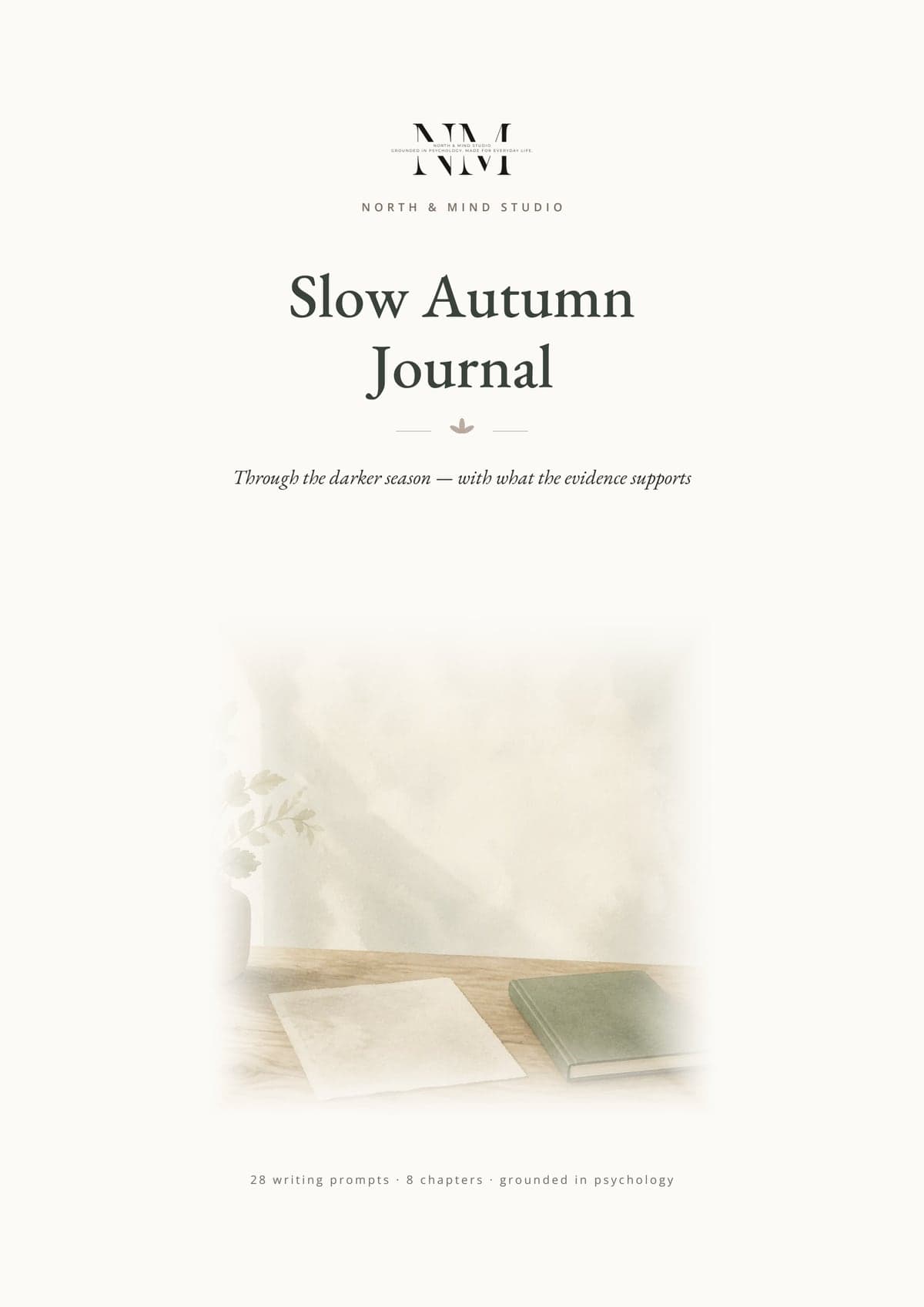
A journal for the darker months
Most autumn journals open with a claim that is not supported. “The days get shorter, mood sinks.” For this booklet I went and read what the research actually shows — and it supports that sentence far less well than the shelf of autumn self-help books beside it suggests. In a US survey of 34,294 adults, no association could be shown between depressive symptoms and season, latitude or hours of sunshine.
The button takes you straight to this item on Etsy. Once you have paid, the PDFs are ready to download.
A smaller group of people genuinely is affected by the season — around five per cent, plus nine per cent in a milder form, estimated from screening questionnaires. For them it is real, and for them there is something better than a writing booklet. That is on page 3, together with the note about when to see a doctor.
What does change reliably is something else: the light, and with it the rhythm of the day. When you are outside, when the evening begins, when you stop working. That is where this booklet starts.
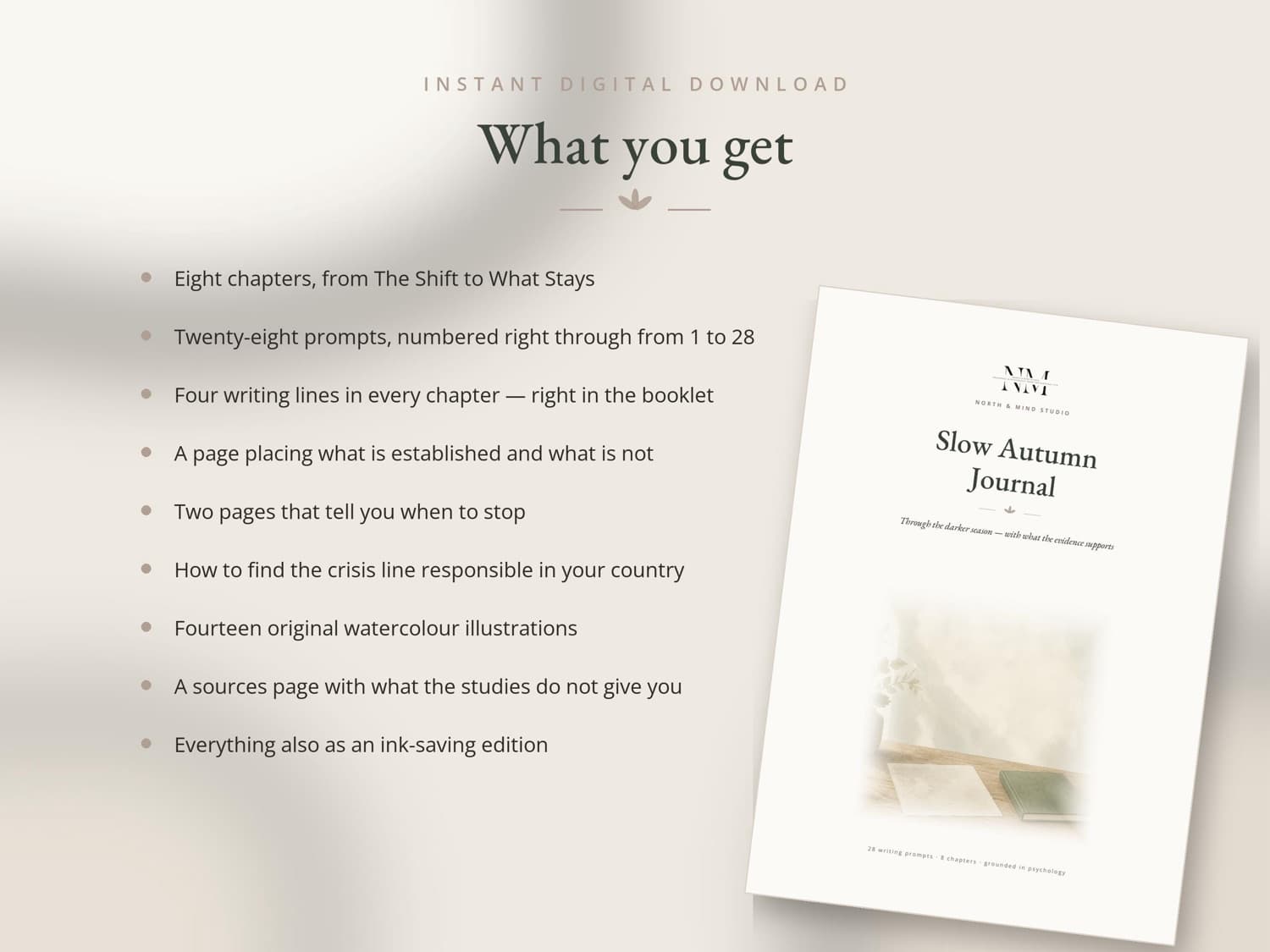
Eight chapters, twenty-eight prompts:
Under every chapter you find what the research says — and where it stops. With effect size, sample and what the study does not show. One chapter states outright that one of the methods named did not improve sleep in a randomised trial.
The button takes you straight to this item on Etsy. Once you have paid, the PDFs are ready to download.